

San Jose and the Mexican Presence Shaping Its Cultural Pulse

San Jose may be known globally for innovation, but its cultural backbone owes much to a quieter, older force: the enduring influence of its Mexican community.
A City Built on Technology, Sustained by Tradition
San Jose often appears through a single lens—Silicon Valley, headquarters of invention, disruption, and corporate acceleration. Yet beneath that narrative lies another story, one that predates the tech boom by more than a century. Mexican heritage has shaped the valley’s agriculture, labor systems, neighborhoods, and, increasingly, its social identity.
The result is a city where advanced industries coexist with cultural traditions that retain their own momentum.
Historical Roots With Contemporary Impact
A Presence Long Before the Microchip
Mexican families lived and worked in the Santa Clara Valley long before orchards gave way to office parks. Their influence spans the region’s early farming economy, civic development, and social fabric. Today, those roots remain visible in community institutions, family-owned businesses, and the linguistic landscape of the city.
Culture That Adapts Rather Than Competes
Rather than fading under the force of economic transformation, Mexican cultural expression has adjusted to the speed of Silicon Valley. Food, music, festivals, and social networks have evolved alongside tech-led demographic shifts, making Mexican identity not a countercurrent but a quiet stabilizer.
Where Tradition Meets a Multicultural Ecosystem
A City That Absorbs Rather Than Rejects Influence
San Jose’s population is one of the most diverse in the United States. Within that mix, Mexican identity remains highly visible, shaping the city’s public spaces, dining landscape, and communal rituals. It is not ornamental; it is foundational.
Food as a Social Bridge
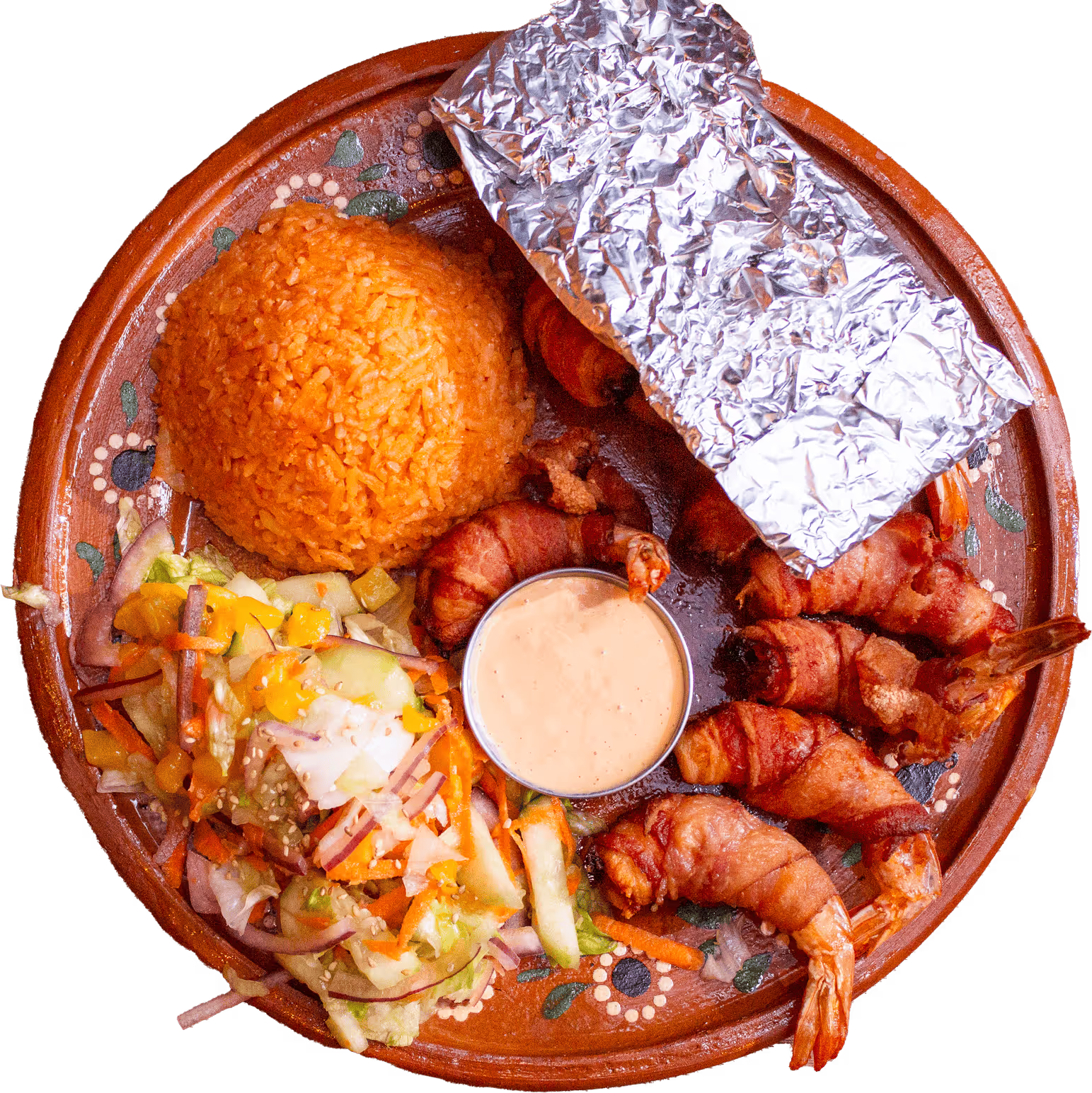
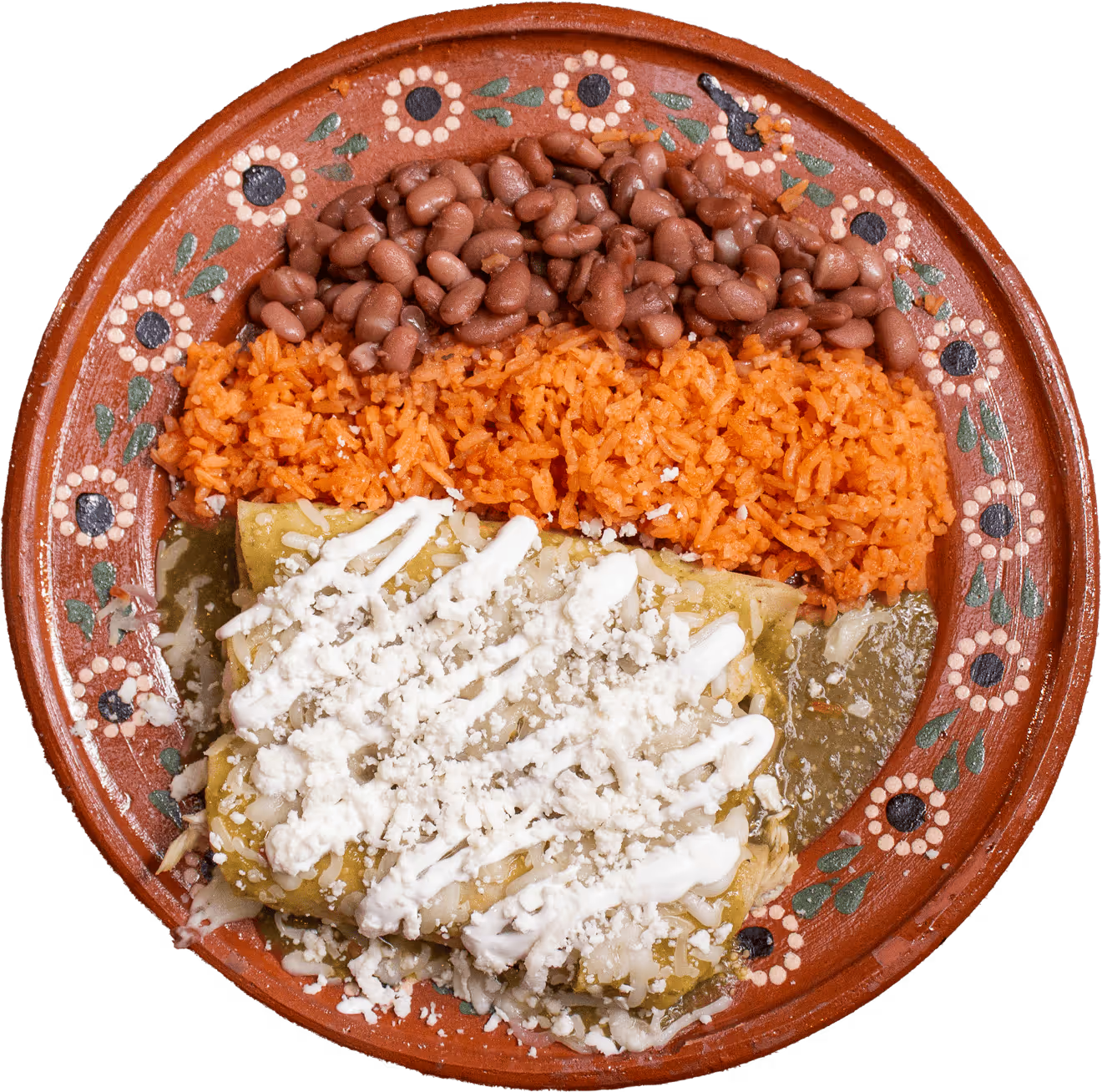
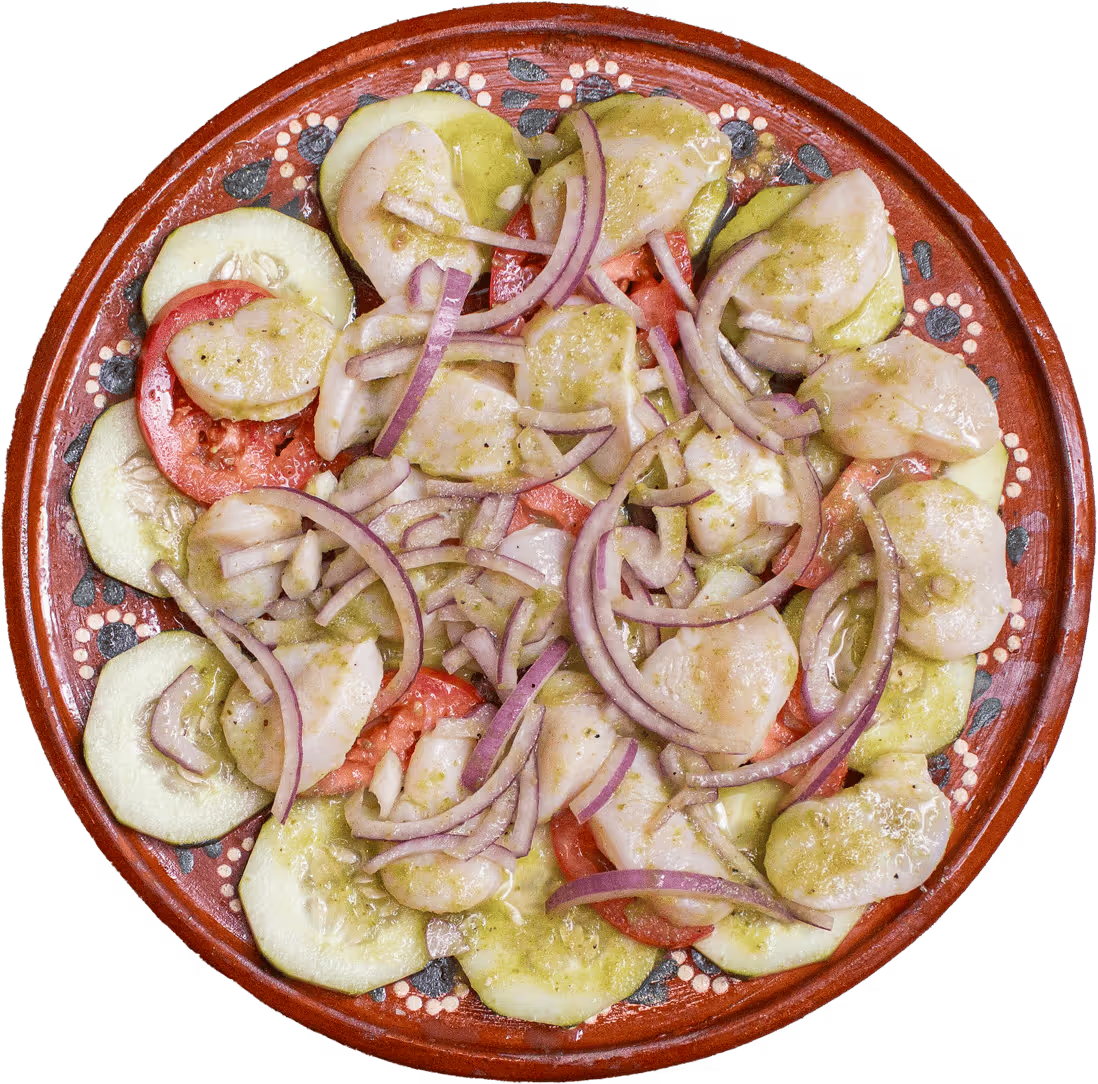
Mexican cuisine functions as an anchor in a city where residents cycle rapidly between work, commute, and digital demands. Its presence—from street-level taquerías to modern restobars—offers a familiar point of contact in an otherwise accelerated environment. It reminds the city that not all forms of value are measured in scale or speed.
The Role of Mexican Identity in Modern Nightlife
H3: Community Before Spectacle
Nightlife venues that incorporate Mexican music, social rituals, and communal dining attract a wide range of guests, not just the Mexican community. The appeal lies in the emphasis on connection rather than performance—a contrast to the transactional pace of Silicon Valley’s work culture.
A Rhythm That Counters the Valley’s Urgency
Music genres rooted in Mexican traditions—banda, norteño, cumbia—offer a rhythm that resists the urgency of the region. In spaces where people gather to dance, eat, or simply unwind, these sounds act as a collective release valve.
A City Enriched, Not Defined, by Its Mexican Community
The influence of Mexican heritage in San Jose is neither marginal nor dominating. It operates as a stabilizing layer—one that contributes continuity to a region otherwise shaped by constant reinvention. It is part of the city’s lived reality: visible in its neighborhoods, audible in its nightlife, and essential to the operation of thousands of local businesses.
In Summary
San Jose’s story cannot be told through technology alone. The Mexican community has played a central role in shaping the city’s economic, cultural, and social landscape. Its presence offers continuity, identity, and rhythm in a region defined by volatility.
FAQs
How long has the Mexican community been part of San Jose?
Mexican presence in the region predates the tech industry by more than a century, with roots in agriculture, labor movements, and civic development.
How significant is the Mexican population today?
San Jose has one of the largest Mexican and Mexican-American populations in California, influencing food, music, business, and cultural life.
How does Mexican culture influence the city’s dining scene?
It introduces culinary depth—from traditional taquerías to contemporary restobars—and shapes the city’s social habits around food.
H3: Is Mexican identity still visible in Silicon Valley’s modern culture?
Yes. Despite rapid technological expansion, Mexican traditions remain embedded in festivals, neighborhoods, cuisine, and daily social exchanges.
Why is Mexican culture relevant to San Jose’s nightlife?
It provides communal, music-driven experiences that contrast with the fast-paced, productivity-centered lifestyle of the region.
How does the local community engage with Mexican businesses and venues?
Through dining, cultural events, nightlife, and a steady demand for authentic and contemporary expressions of Mexican identity.


reser
vation
.svg)